Tune In for PMHI's June 2026 Webinar
Wednesday, June 10th, 2026 • 5:00 PM - 6:30 PM • Irish Time
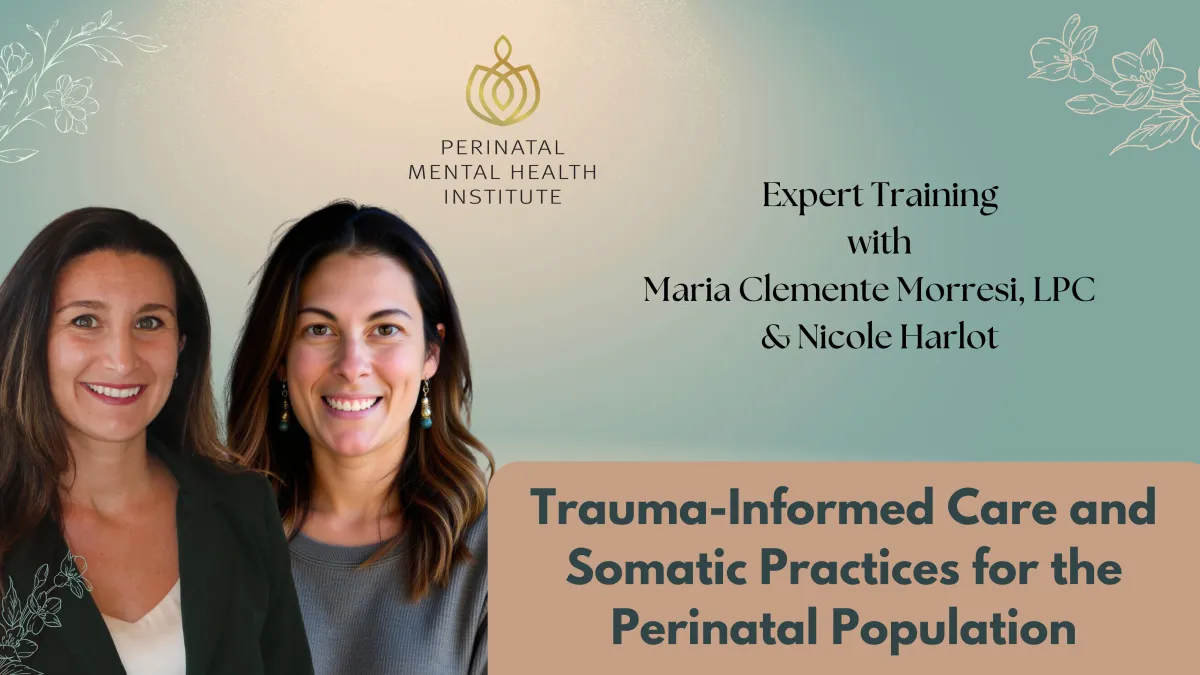
The perinatal period is one of the most physiologically and emotionally demanding transitions in a person's life — and for those with a history of trauma, it can be profoundly destabilizing. This training moves Trauma-Informed Care (TIC) beyond a checklist of clinical competencies and into a deeper, more embodied framework: one that centers safety, trustworthiness, and patient agency at every point of care.
Participants will explore the neurobiological underpinnings of trauma, including how the HPA Axis mediates the body's stress response and why trauma doesn't simply fade with time — it recalibrates the brain.
A central focus of this training is the shift from implied to explicit informed consent — restoring what trauma so often steals: the gift of choice. Professionals will learn how small but intentional shifts in language, pacing, and power-sharing can fundamentally transform the therapeutic relationship.
Because the body keeps the score, healing must meet trauma where it lives. This training introduces neurosomatic and somatic practices designed to work at the level of the cells and nervous system, offering perinatal professionals concrete tools to support regulation, safety, and resilience in their clients. Ultimately, true trauma-informed excellence is achieved when the clinician's knowledge meets the client's lived expertise — and both are honoured equally.
Wednesday, June 10th, 2026 • 5:00 PM - 6:30 PM • Irish Time
This event has passed but the recording is available for purchase here
Or join our Community Hub and get access to trainings like this one EVERY MONTH
Why This Training Matters
The perinatal period is one of the most physiologically and emotionally demanding transitions in a person's life — and for those with a history of trauma, it can be profoundly destabilising. Many professionals understand trauma-informed care in principle but struggle to move beyond surface-level implementation. This training offers a concrete, embodied path forward: one that meets trauma where it lives, in the body.

What You'll Learn:
The core principles of Trauma-Informed Care and how to move beyond surface-level implementation in perinatal settings
How the HPA Axis regulates the stress response and why chronic or traumatic stress creates lasting physiological change
The ways trauma recalibrates the brain, including its effects on threat perception, sensory filtering, and interoception
Why the perinatal period is a particularly vulnerable window for trauma activation and re-traumatisation
The critical distinction between implied and explicit informed consent, and how to apply a consent-forward approach in practice
How intentional shifts in language, pacing, and power-sharing can restore a sense of agency for survivors
The foundational concepts behind somatic and neurosomatic healing — and why body-based approaches are essential for trauma recovery
Practical somatic tools you can integrate into your role to support nervous system regulation in perinatal clients
How to bridge your clinical expertise with your client's lived experience to achieve genuinely trauma-informed, collaborative care
Meet Your Instructors!
Maria Clemente Morresi, LPC
&
Nicole Harlot
Maria Clemente Morresi, LPC, is the Co-Founder and Vice President of the PRC and Founder and CEO of Reimagined Mind Counseling.
She brings deep expertise in trauma-informed mental health care, with a focus on improving systems of support for both mothers and the professionals who serve them. Together, they have built the PRC into an international ecosystem dedicated to clinical excellence and collaborative maternal care..
Nicole Harlot is the Founder and President of the Perinatal Resource Collaborative (PRC), a global mission to defragment maternal healthcare.
A New Jersey mother of four, her personal experience with postpartum OCD and anxiety led her from a career in finance into advocacy. She is a Master Practitioner of neuro-somatics and creator of the Womb Light® modality, specialising in building community support through innovative tools like Seedlinks and the PRC SPARK Fund.

Join the PMHI Community Hub
Where Perinatal Providers Connect & Grow
€19/month gives you:
Attend ALL monthly webinars (with 90-day recording access)
Monthly peer consultation groups
Discussion boards & a treasure trove of resources
Discounts on all other PMHI trainings
Frequently Asked Questions
What if I can't attend the live webinar?
Don't worry! When you purchase a live webinar, you'll also automatically receive access to the recording once it is available. This allows you to watch at your convenience if you can't attend live or want to review the content.
If you are a PMHI Community Hub member, you will be automatically invited to attend all live webinars. If you are not able to attend live, each webinar recording is available to you through your membership for 3 months after it was recorded.
Will I receive CPD credits for attending?
You'll receive a certificate of attendance for each webinar, which you can use for your continuing professional development records. The certificate includes the webinar title, presenter, date, and duration.
How do I join the live webinar?
After registration, you'll receive an email with all the details and a Zoom link. We'll also send reminder emails closer to the event date. Simply click the link at the scheduled time to join.
Is there a discount for purchasing multiple webinars?
The most cost-effective way to access multiple webinars is through our PMHI Community Hub membership. For €19/month, you get access to all upcoming monthly webinars plus any recorded webinars from the previous 90 days. You'll also get additional benefits like peer consultation groups and resource libraries.
What technology do I need to participate?
You'll need a device with internet access and the ability to run Zoom. While you can join from any device, a larger screen is recommended for viewing presentation slides. A microphone is helpful for the Q&A portion but not required, as you can also submit questions via chat.
Are the webinars interactive?
Yes! Each webinar includes time for Q&A with the presenter. You can submit questions via the chat function or use your microphone to ask directly during the designated Q&A period. Some presenters also welcome questions ahead of time and when they do, we'll send an email with a form to submit your questions before the event.
What level of expertise is required to benefit from these webinars?
Our webinars are designed to be accessible to professionals at all levels while still providing valuable insights for experienced practitioners. Each webinar description includes information about the intended audience to help you choose the most relevant sessions.
Can I share my registration with colleagues?
Each registration provides access for a single viewer. We appreciate your understanding that sharing access with others impacts our ability to continue providing quality education.